
The Factory of the Future

What is a Smart Factory?
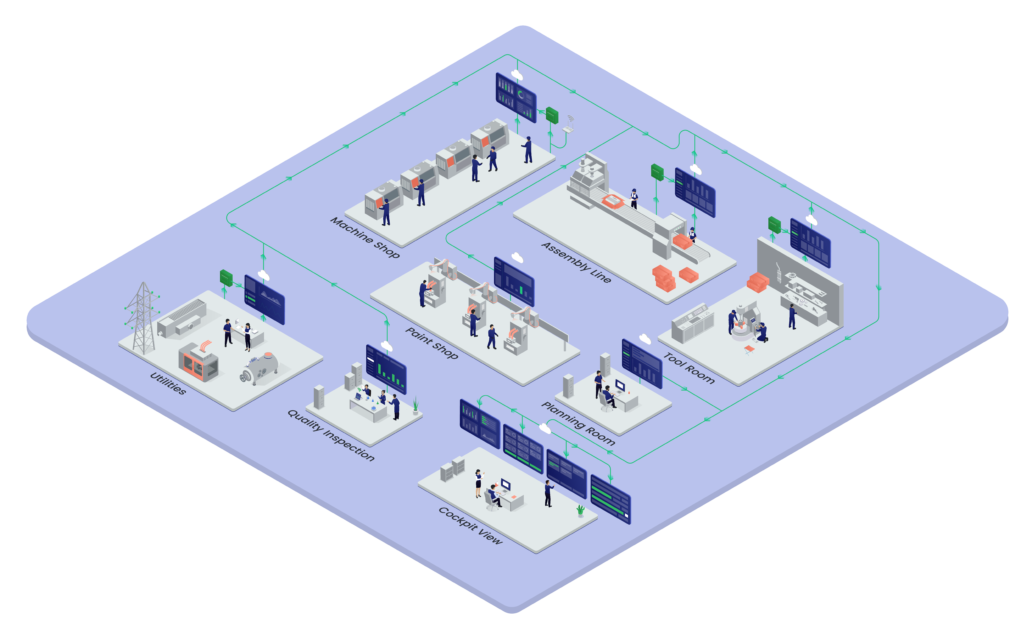
A Smart Factory is a digitized shop floor that continuously collects and shares data through connected machines, devices, and production systems. The data can then be used by self-optimizing devices and across the organization to proactively address issues, improve manufacturing processes and respond to new demands, hence reducing the need of manual labor and decreasing the errors occurring on the shop floor.
Why convert into a Smart Factory?
A Smart Factory allows the minimization of production process times, as well as its costs, as it is able to adapt and optimize the processes in addition to storing and analyzing a large amount of data in real time. This results in a more flexible, efficient and autonomous production by making people focus more on improving processes and not so much on repetitive tasks, providing great value.



Machines that we speak to
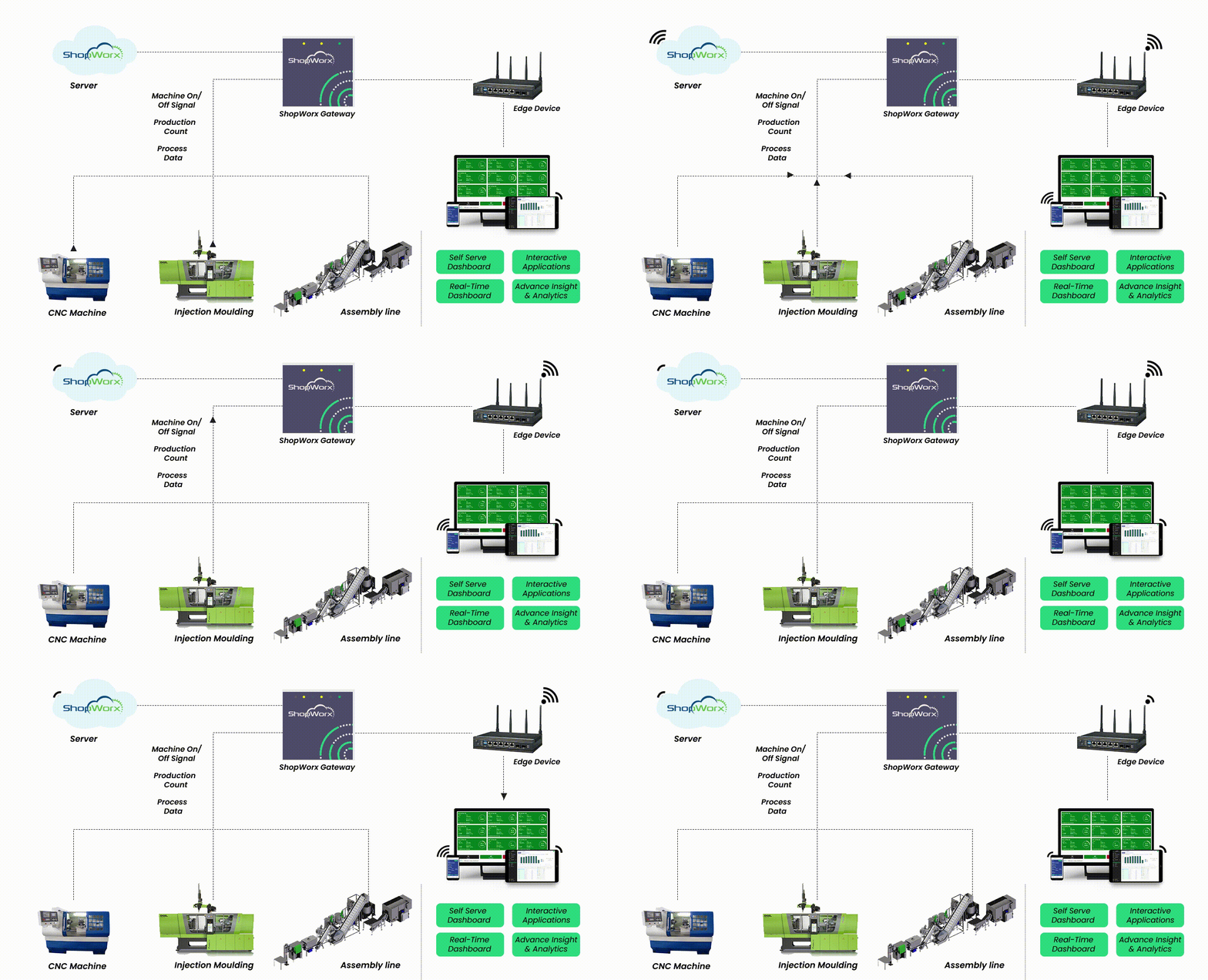
ShopWorx Smart Factory Solutions can be integrated with discrete, process and assembly line manufacturing machines. We can connect to various types of machines and assets of different makes and models such as Injection Moulding, Press Machines, CNC, VMC, SPM's, Assembly Lines, Packaging Lines, Paint Shops, Weld Shops, Food Processing Lines etc.We can also collect data from existing machine controllers, PLC's, SCADA systems, MES and sync it with any kind of ERP.
Journey towards a Smart Factory
Sense

Machines on a Shop Floor are connected with hard-wired devices which help in collecting and analyzing the data.
Digitize

Data collection process is digitized and provided in the form of reports on dashboards and mobile apps.
Analyze

Reports and KPI Dashboards are available which help in analyzing the data hence saves time, energy and resources.
Transform
The data driven actionable insights help in transforming the processes of a factory leading it towards becoming a Smart Factory.
Advantages of Smart Factory
A Smart Factory helps bring higher productivity along with enhanced efficiency and better product quality. It also leads to lower production costs and less time wastage due to unknown errors. The process therefore leads to maximum flexibility, increased agility and improved predictability.